
Food News & Quick Bites: I haven't had a chance to write about it here yet, but if you follow me on Twitter you probably know I'm obsessed with a Cambodian (inspired) sandwich place in Manhattan called Numpang. The flavors are incredible; I salivate all day dreaming of the moment I'll walk up to the booth and be handed a grilled shrimp with coconut sandwich drenched in spicy sauce. Oh boy. They're a bit expensive for the size but the flavor is so good I notice every little morsel.
But that was before I met Xie Xie. Today I was reading an article on The Daily Beast about Guy Fieri & his haters. One thing lead to another and soon I was scanning a blurb by NYC chef Angelo Sosa, with whom I attended church for about a year and a half when I first moved here. He recommended Hop Shing, a dumpling haunt in Chinatown. Who doesn't want roast pork buns with a sugary glaze? I quickly yelped it & it has officially moved to my must-try list.
I was tickled to see Sosa on a culture maker/shaker like TDB; it seems, somehow, as much a sign of success as actually working a 4 star kitchen. Curious to see what he's been up to since our paths diverged I clicked on his bio.
Enter Xie Xie, Sosa's new Asian sandwich shop. I may end up remaining devoted to my true love, Numpang, but that doesn't mean I won't be trying half the things on his menu, like shredded pork shoulder marinated in hoisin sauce, oyster sauce, sesame oil, and soy, or his 1000 year old ice cream sandwich with a burnt black fleur de sel caramel center. Take me now! I can't wait to start the brutal process of comparing the rival Asian sandwich joints, one flavorful lunch at a time. (See a review here by someone who has already begun.)
Also on the sweet side, this weekend from 1-5 is the Brooklyn Chocolate Experiment. The event is a cook-off by amateur chefs followed by a free after-party "with chocolate galore." Um, yes please!
Showing posts with label asian food. Show all posts
Showing posts with label asian food. Show all posts
Wednesday, November 11, 2009


Tuesday, November 10, 2009
Lettuce Entertain You
Because salad is so early 90s.

First reason why I'm sorry: Lettuce find a nicer title...no, lettuce continue to use puns. And lettuce not forget how fun a good pun can be.
Second reason why I'm sorry: all photos courtesy iPhone. Apprently Mack Camera is doing battle with Fuji on my behalf to get my camera fixed but point is...it is still...NOT. Gar!
Third reason why I'm sorry: not to presume you've missed my sassy low-brow cooking but in case you have, I've been away feeding real people in the real world for the past two months. Guests almost every weekend, if you can believe it. Last one for a while left today and I thought I'd commemorate the season of reuniting with old friends by reuniting with y'all. You might not miss me, but I miss you! At least, I miss being able to delude myself I have readers. Same difference.
Taste & See: Tonight's challenge: Use up 2 heads of lettuce. Not in one night, heavens no. Even my celery munching self is not that much of a rabbit. In fact, I am starting to have a Lettuce Problem. My CSA keeps presenting me with these gorgeous, crisp heads of lettuce faster than I can consume it. And in my laziness, I've started eating...plain lettuce. Salads made of torn lettuce and torn lettuce only. And I've learned something very valuable about plain lettuce. It is...gross.
But maybe the problem isn't lettuce, but my callousness. Maybe lettuce just needs a little TLC, a little devotion. I pay attention to sturdy vegetables like carrots and onions but wilty little lettuce has been getting no love. I just throw it in a plastic bag and shove it in the fridge, only pulling out a few leaves when the guilt of ignoring it becomes too much.
Today I resolved I would devote a little more tender loving care to my lettuce. Be gone with these lackluster salads. I would discover other lettucian uses and embark upon a whole new lettuce themed adventure! It sounded impossible, but The Faux Gourmet is nothing if not intrepid.
Let me tell you, as one who has been to the edge & back: It can be done. Since I'm sure reading about lettuce gets old as quickly as eating it, here's a play by play of tonight's mission accomplished: lettuce wraps. Lettuce takes the place of bread in a fresh and light twist on a burrito or eggroll. The filling is up to you--this was inspired by fellow CSA goodies carrots, jalepenos, leeks & radishes. Enjoy!
Do It Yourself: Spiced pork & vegetable slaw lettuce wraps
Dice 1 square inch ginger, 2 large cloves garlic, 1 small jalepeno and saute in oil in large, shallow pan.
Chop 1 leek (or greens of 2-3 leeks OR 2 spring onions) and add when onions are translucent, about 2 minutes.
When leeks soften, about 1 minute, add 2/3 to 1 lb ground pork.
Season with a few good shakes of soy sauce, 1 to 2 tablespoons brown sugar, and a dash of cumin and coriander.
Allow meat to cook until browned; turn down heat to a simmer and cook until most of the liquid evaoprates into a thick sauce.

Buy a food processor. If you already have one, you may skip this step. Armed with your mighty food processor, push 2 carrots, half a cucumber, and 3 radishes (the quantities are, of course, to taste; if you just have a carrot, just use a carrot!) through and make yourself beautiful shredded veggies in seconds.

Combine equal parts soy sauce and sugar, twice as much lime juice, and a dash of sesame oil. Add a dash of sriracha if you like it hot. Stir to make a dipping sauce.

Serve with rice and washed lettuce leaves. To make a wrap, spoon a bit of rice, meat and veggies on lettuce. Top with a small spoonful of dipping sauce and crushed peanuts. Fold bottom third of lettuce "spine" up, then wrap soft sides of lettuce around it. You'll get your fingers messy, but hopefully have fun doing so.

I think I'm going to reward myself for getting this entry together with...another lettuce wrap. Yu-ummy.
Thursday, September 18, 2008
"Salmonella Stew"
A Korean delight rediscovered in the US.

Taste & See Part I: It started off as a simple meal in Korea, meeting up with old friends for lunch. Nothing complicated. Little did I know I was about to fall in love with "Dak Galbi," a Korean grilled chicken dish (christened "Salmonella Stew" by a friend because of the do-it-yourself cooking technique, see below). Back in the US I found myself craving Dak Galbi, but alas . . . where to find this mystical dish?
I was originally told it couldn't be found; Dtak Galbi was available only in Korea itself. Supposedly, chicken is viewed as an inferior meat and not worth bothering with here in the US, where everyone just wants to eat Bulgogi, beef barbecue
But I'm not the only one who's been looking. The folks who "live to eat," that is, the foodies who post their tips for inquiring minds at Chowhound, have also been on the hunt. Through the remarkable sleuthing of fellow foodie/Faux Gourmet JK, Chowhound revealed Dak Galbi's home in Los Angeles, at a Korean restaurant with a Korean sign full of Koreans, in Koreatown, with what I'm told is a perfect replica of the decor of a regular eatery in Korea (that is to say, without decor at all)--in other words, the best kind of place to get Korean food. Foodie, meet Mapo Galbi:


Mapo Galbi might serve something other than Dak Galbi but you'd never know by looking. Inside are dozens of Koreans crammed in around open flame-bbqs fit right into the table with cast iron skillets atop full of Dak Galbi in various states of readiness (and eatenness!). No non-Koreans or menus to speak of; you essentially order by saying how many portions you want and the waitresses take care of the rest. Delightfully, the food was just as I remembered it, good enough to compensate for the surprisingly high price for a dish made of "inferior" meat. The servings are also larger than necessary; even with two guys in the party, a 3-person serving had enough leftovers for 2 more meals.
Mapo Galbi is located at 3090 W. Olympic Blvd., LA.
Taste & See Part II: I found Faux Dak Galbi again recently in New York City at Korean "fast food" fried chicken chain KyoChon a mile past the end of the 7 line in Flushings. Do NOT mistake this for KFC-quality; that would be a terrible mistake; see here for a more thorough review. Quite a hike out there, but worth it, if not for the Faux Dtak Galbi (pre-made, and the waiter said it was not the beloved Dtak Galbi but it looked and tasted more or less the same):

Then for the delicious fried chicken:

And cheap ($13!) immense pitcher of Blue Moon with orange slices:

(Photos courtesy the telephone of B. Carlisle)
This entry isn't going to tell you how to make Dak Galbi. I have made it, but only once, and I don't want to subject you to my muddled interpretation of a recipe I don't really know. Chances are, given the difficulty of finding the dish in the US at all, you've never heard of it, much less tasted it. So let's start at square one. I'll introduce you to some seriously good food, step by step, and hopefully when it comes time to do-it-yourself, you'll be as enthused as me & the Chowhound foodies.
First, a big iron pan over an open flame is filled with raw chicken pieces, sweet potato & rice cakes ("dok").

A healthy dose of spicy sauce is added.

The lot is cooked for about ten minutes, stirring occasionally.

Sesame seed leaf ("caet nip"), mushrooms, and cabbage are added for a nice pop.


Everything is stirred together.

Once cooked, very happy eaters can snatch up bites straight from the pot with chopsticks. Delish!

The best part about Dak Galbi is that the chicken is just phase one. The bottom starts to form a nice thick sauce, and rice and seaweed are added and stirred in.


The rice/seaweed mix is pressed down in a thin layer and the bottom gets a nice crispy crust, a treat worth fighting fellow diners over.

Good luck finding Dak Galbi at a K-town near you . . . and if you do, please do let the Faux Gourmet in on your find!
Saturday, January 19, 2008
Packing Light
Turn a couple easy dishes into a week of meals,
the culinary version of packing light.
the culinary version of packing light.
The other day I was un-self-consciously promoting this blog, as I am wont to do, excitedly telling a friend about all the photos I'd taken in Asia. "Sounds great," he replied, with bitter sarcasm, "I'll have to check it out next time I need to figure out where to eat in Asia." His point being, if he's going to waste his valuable time looking at pictures of food (he's clearly not a foodie), it better be food he can eat. Fair point. So interspersed with the pointless but delightful entries I plan to bring you stuffed with photos of food you probably won't be eating any time soon, I'll try and provide some things that will be of a bit more practical use.
Taste and See: Two of my most popular entries to date have been the seared tuna steak and its variation, which are easy enough for even my non-foodie friend, so I thought I'd update with my new tuna obsession.
 I found a stunning photo of a sesame-encrusted tuna steak in Gourmet Magazine a few days ago, and while I was far too lazy to make it to the letter (fry strips of zucchini for garnish? are you mad?), tonight I am sitting down to my fourth serving of my own faux-gourmet version of sesame-seed encrusted seared tuna steak in a week. Overkill? Perhaps. But it is just so good, and so easy . . .
But woman cannot live by tuna alone. In fact, while I normally eat very little meat, my mom was chiding me about iron over the holidays so I bought some beef for a change. And SE Asia has little in the way of fresh greens, so I also picked up some broccoli, a big bag of washed salad leaves and some random salad toppings. After having been out of town for a month my fridge has mostly remnants of nearly-expired fruits & veggies, but my well-stocked cupboard has plenty of dried carbs, like couscous and rice noodles.
In the true faux gourmet spirit, I turned all that into a couple of dishes that can complement each other in a couple easy combinations. About one hour total cooking produced several interesting, and totally different, meals. Think of it as a food-parallel to an expert traveler who packs light and still manages to come up with a different, fabulous outfit every day.
First, the individual dishes:
1. Left-over Veggie Couscous
2. Fried Soy-Sauce Rice Noodles with Broccoli
3. Beef Fajita-Filling
4. Sesame Seed Encrusted Tuna Steak
5. Mixed-greens salad with various toppings
Second, the meals I made of them:

1. Pepper-beef Couscous over Mixed Greens [1 + 3 + 4 + Hummus]
- Top a bed of mixed greens with a scoop of couscous and 1/2 the fajita filling
2. Sesame Tuna Steak and Noodles [2 +5]
- Serve 1/2 Tuna Steak over a small portion of broccoli-accented soy-sauce rice noodles
3. Fajitas [3 + tortillas]
- Fill tortillas with remaining fajita mixture
4. Phat Siew & side salad [5 + 2 + peanuts]
- Top remaining noodles with peanuts and add a side salad with toppings of your choice
5. Tuna Steak Salad with Couscous [1+ 4 +5 + Sesame Soy Dressing]
- Adding strips of seared tuna steak to wild greens, orange slices, cashews, and a soy sauce dressing and finish off the couscous
Now for the recipes, if you can even call the simple steps "recipes." More important than that are the time-saving tips at the end. I really made all that in about an hour, and you really can too- it is just a question of doing things efficiently.
What you'll need to cook the five meals above for 1 person:
1. 1/2 lb tuna steak
2. 1 pack sesame seeds
3. 1 pack dried rice noodles
4. 1/2 cup couscous and a little butter
5. Bag of wild greens
6. Various salad toppings, such as: roasted nuts, dried berries or other fruit, sun dried or fresh tomatoes, oranges, apples, shredded carrots, green or red onions. A great way to use up leftover veggies!
7. 1/2 lb meat you like (I used beef)
8. Tortillas
9. The random odds and ends of leftover veggies in your fridge. You can use almost anything in the couscous, pad siew and fajitas. You'll need a little over 2 cups total.
10. Salt, pepper, garlic & whatever spices you have on hand
11. Soy sauce & a few other Asian sauces
12. 1 egg
13. Tupperware, because you're going to have leftovers!
Couscous:
This is essentially Almost-Instant Couscous, only using whatever leftovers your fridge has to offer. The couscous box should also contain easy microwave directions, but if it doesn't,
- Mix 1 tbsp butter, 1/2 cup couscous and 1/2 cup water in a microwave safe bowl.
- Cover and microwave 3 1/2 minutes.
- Fluff with fork.
- Stir in any toppings, approx 3/4 cup.

You can eat it plain, of course, but I almost always use couscous as a vehicle for using up the random bits of things in my fridge that would otherwise go unloved. This time that meant some chopped up celery, which I briefly sauteed in butter; the few not-yet-moldy spinach leaves from a pack purchased weeks ago with the best of intentions, sauteed briefly with the celery; a few stray sun dried tomatoes, and a handful of dried cranberries originally purchased to top salads. I seasoned with a bit of salt, pepper and cumin. Try mixing in a bit of plain yogurt to add moisture without adding fat (thank you Barefoot Contessa), and other toppings like pine nuts, green onions, eggplant cubes, mushrooms, or dried cranberries. Briefly saute vegetables if you don't want it too crunchy.
If you're a big eater double the recipe and save yourself the trouble, but use a big bowl, because the couscous plumps up quite a bit when cooked.
Fried soy-sauce noodles with broccoli:
This is essentially Phat Siew recipe, pared down-
- Soak dried rice noodles in hot water (a bunch about as big as your fist can grab)
- Chop about 3/4 cup broccoli into bite-sized pieces and fry briefly with some garlic; set aside
- Mix equal parts soy sauce, oyster sauce, sweet soy sauce and rice wine vinegar + a dash lime juice and sugar, totaling about 1/2 cup total sauce; in a pinch you can always stick to watered down soy sauce (so it doesn't get too salty but still has enough liquid) + sugar
- Fry rice noodles in oil, adding sauce as they soften
- Crack egg into pan and scramble as it cooks, stirring into noodles
- Add broccoli to noodles
- Season to taste (add chili flakes, sugar, lime juice, or soy sauce to adjust flavor)
Beef fajita filling:
- Fry a few cut up pieces of garlic in oil
- Add about 3/4 cup vegetables and saute til soft; set aside
- Slice meat into strips and place on very hot pan to sear, turning once

I cut up the remains of two aging bell peppers for my filling, though mushrooms, onions, tomatoes, or even potatoes would be tasty as well. For flavoring I used a jar of sauce from Trader Joes (Cuban Mojito sauce), adding to the vegetables about midway through cooking them. You could use any pre-made sauce you like, but if nothing else, salt, pepper and garlic go a long way.
I also like my beef a bit rare, so a minute or so per side was enough to cook it perfectly. If you need to cook it all the way through it will take a bit longer.
Sesame Seed Encrusted Tuna Steak:
- Toast sesame seeds til a bit darker than golden brown in large, flat pan
- Rinse & dry tuna steak
- Coat each side of steak with a small amount of oil (I used the lovely Lime Reisling Grapeseed oil; the subtle flavor of the lime sneaks through perfectly) and cover in sesame seeds
- Sear in very hot pan for about 1 minute on each side for very rare tuna or longer (3-4 minutes per side) if you want it more done; see here for technique tips

Saving Time:
- Buy salad toppings that require no chopping- cashews, cranberries, pre-shredded carrots; making a salad takes all of 2 minutes.
- Start by soaking the rice noodles in hot water, as it takes a while.
- Toast the sesame seeds for the tuna while the couscous is in the microwave, then keep them in an airtight container in your cupboard for future use- you'll definitely have leftovers.
- Do all the veggie chopping in one fell swoop and set aside the veggies in small bowls; you'll feel just like a TV chef pouring them in with grace and ease
- Only once the vegetables are all chopped get out the meat; it makes cleaning much easier
- Mix sauces, such as the one required for fried noodles, before you begin cooking the noodles, so you're not trying to add separate ingredients and stir at the same time
- Saute at the same time, but in two separate pans, veggies for couscous and those for the fajita filling. Re-use the fajita pan without cleaning for the fajita meat; re-use the couscous pan for the tuna after rinsing briefly and letting the burner evaporate the water as the pan heats.
Enjoy!
Sunday, January 13, 2008
First Stop: Singapore
My dear reader,
Thank you ever so much for your patience as I scurried about Southeast Asia photographing (and let's be honest, eating) quite a bit of food. The good news I have more SE Asia material waiting to be posted than I know what to do with, not to mention the backlog from the holiday season. The bad news is, well, I have more material than I know what to do with. But food photos tend to be more interesting than all this talk, talk, talk, so let's make a deal to help us both: I'll keep things a little more photo-essay, a little less essay-essay and you just enjoy mountains of photos. Of course, I'll still include recipes when I can so you can enjoy mountains of food as well.
Sound good? Then shall we begin?
Taste & See: The Lonely Planet makes hawker centers look like raucous snacking Bacchanalia, full of rowdy people stuffing faces in crowded, hectic fashion. Not so. The centers I visited were all spacious and organized, with English menus and numbered tables.
 One contained an enormous sign boasting in both English and Chinese the top 10 Singaporean dishes one must try: chili crab, char kway teow, carrot cake, chicken rice.
The "must try" chili crab: there's no way you're staying neat and clean when you eat it.

The always reliable dim sum: from left to right, cha siew bao (red pork bun), shu mai (pork and shrimp stuffed egg wrappers) ha gao (shrimp wrapped in translucent wheat starch). If you can't make it to a hawker center you can always buy these at 7-11 . . .

The best food I had in Singapore, however, was not on this marketing-savvy list, but in far more colorful Little India.


Drinking 'pulled tea,' chai, made frothy by pouring between the tin cup and accompanying bowl, and eating a dosa, a big crepe-like roll from South India filled with potatoes. Sources say it tastes best if you eat with your hands (right hand only!) . . .
 And from a banana leaf . . . I believe the white sauce is coconut based, though I'm not certain exactly what the other accompanying sauces are. It is lovely to watch them ladled with a splash from giant messy tins.

Not everything was roses, however. On one of my last nights my traveling partner and I were stuck in the rain, desperate for (and not finding) a place to eat. We chanced upon a Malay cafe with lovely pictures of roti, and thought we'd hit gold.

Not so. This was the "roti" we got: eggs in a baguette with chili-katsup on the side. Its like Malay food goes to McDonalds- not a happy instance of fusion. (I should take this opportunity to not only credit A for not complaining when faced with McRoti, but suffering through my constant food-photography.)

Generally things in Singapore tended to be a big. Unlike Thai street food, which comes in tiny bites, the centers serve mostly meal-sized portions (dim sum, above, is one exception), preventing solo or short-term travelers from experiencing more than a few on the list.
More endearing were the mangoes as big as my head:

If I were a Western wedding, my ego would be smashed by the larger-than-life Chinese banquets served at the weddings I attended, one of which was choreographed to a light-and-music show.
 The appetizer plate: Prawns with fruit salad, Fried seafood toast, BBQ pork coins, Marinated jelly fish with chili sauce and sesame seeds, Smoked Chicken

The rest of the menu consisted of Braised shark's fin soup with crab meat, bamboo fungus and fish; with vegetable crackers, Roast duck with vegetable crackers, Steamed red pearl garoupa with Superior sauce, Boiled "Live" Prawns with Chinese "Hua Tiao" wine; Fresh scallops with nameko mushrooms, Thai asparagus and Oyster sauce; & Fragrant rice with chicken and Chinese sausage wrapped in Lotus Leaf. The pile of shrimp heads left over after we'd all had our fill of "drunken-shrimp":

Such a banquet calls for a magnificent wedding cake:

We, however, were served double boiled white fungus with hashima and red dates. The cake was from a 'wedding exposition' onto which I stumbled in the Bugis area. I think I would have preferred the cake, culturally insensitive though it may be.
I did try some tastier sweets in Singapore, however. First, at hawker stands- Ice dessert: piles of ice on doused with flavored syrups on top of various jellied bits, topped with beans. Not my cup of tea, but people love it. See also, a quirky Singaporean beverage in the back with Whatever? you never know what flavor you're going to get, kind of like the mystery Airheads we used to eat at the roller rink. Anyone feel me?
 Even better (call me a Western snob) was the red-velvet cake at a local cafe, Food for Thought:

This cake and other goodies are made by local women- "Aunties"- in a bid to promote their independence via cottage industries.

Food For Thought also lives out the values like "Help End Poverty" and "Build Community" proclaimed on giant posters on the wall opposite the kitchen by providing free drinking water in exchange for donations to build wells for the poor world wide, providing free tutoring classes to underprivileged kids.

The coffee was good and the milk was nicely foamed, something I'm picky about in Asia (not a fan of sweetened condensed milk, as used in typical Asian coffees).

Food for Thought is located at 420 North Bridge Road.

Singapore has no shortage of good food and interesting culinary moments, and they're not limited to Hawker centers. Try as I might, I barely scratched the surface in the few days I spent there. Thankfully I had a second chance in neighboring Malaysia (see the next few entries), both a huge influence on Singaporean cuisine and a similar a mix of many different cultures. Ultimately, delicious though Singapore was, my love of Thai street food remains unchallenged.
Thank you ever so much for your patience as I scurried about Southeast Asia photographing (and let's be honest, eating) quite a bit of food. The good news I have more SE Asia material waiting to be posted than I know what to do with, not to mention the backlog from the holiday season. The bad news is, well, I have more material than I know what to do with. But food photos tend to be more interesting than all this talk, talk, talk, so let's make a deal to help us both: I'll keep things a little more photo-essay, a little less essay-essay and you just enjoy mountains of photos. Of course, I'll still include recipes when I can so you can enjoy mountains of food as well.
Sound good? Then shall we begin?
First stop: Singapore, land of hawker centers and self-proclaimed "Food Capital of the World".
Taste & See: The Lonely Planet makes hawker centers look like raucous snacking Bacchanalia, full of rowdy people stuffing faces in crowded, hectic fashion. Not so. The centers I visited were all spacious and organized, with English menus and numbered tables.
 One contained an enormous sign boasting in both English and Chinese the top 10 Singaporean dishes one must try: chili crab, char kway teow, carrot cake, chicken rice.
The "must try" chili crab: there's no way you're staying neat and clean when you eat it.

The always reliable dim sum: from left to right, cha siew bao (red pork bun), shu mai (pork and shrimp stuffed egg wrappers) ha gao (shrimp wrapped in translucent wheat starch). If you can't make it to a hawker center you can always buy these at 7-11 . . .

The best food I had in Singapore, however, was not on this marketing-savvy list, but in far more colorful Little India.


Drinking 'pulled tea,' chai, made frothy by pouring between the tin cup and accompanying bowl, and eating a dosa, a big crepe-like roll from South India filled with potatoes. Sources say it tastes best if you eat with your hands (right hand only!) . . .
 And from a banana leaf . . . I believe the white sauce is coconut based, though I'm not certain exactly what the other accompanying sauces are. It is lovely to watch them ladled with a splash from giant messy tins.

Not everything was roses, however. On one of my last nights my traveling partner and I were stuck in the rain, desperate for (and not finding) a place to eat. We chanced upon a Malay cafe with lovely pictures of roti, and thought we'd hit gold.

Not so. This was the "roti" we got: eggs in a baguette with chili-katsup on the side. Its like Malay food goes to McDonalds- not a happy instance of fusion. (I should take this opportunity to not only credit A for not complaining when faced with McRoti, but suffering through my constant food-photography.)

Generally things in Singapore tended to be a big. Unlike Thai street food, which comes in tiny bites, the centers serve mostly meal-sized portions (dim sum, above, is one exception), preventing solo or short-term travelers from experiencing more than a few on the list.
More endearing were the mangoes as big as my head:

If I were a Western wedding, my ego would be smashed by the larger-than-life Chinese banquets served at the weddings I attended, one of which was choreographed to a light-and-music show.
 The appetizer plate: Prawns with fruit salad, Fried seafood toast, BBQ pork coins, Marinated jelly fish with chili sauce and sesame seeds, Smoked Chicken

The rest of the menu consisted of Braised shark's fin soup with crab meat, bamboo fungus and fish; with vegetable crackers, Roast duck with vegetable crackers, Steamed red pearl garoupa with Superior sauce, Boiled "Live" Prawns with Chinese "Hua Tiao" wine; Fresh scallops with nameko mushrooms, Thai asparagus and Oyster sauce; & Fragrant rice with chicken and Chinese sausage wrapped in Lotus Leaf. The pile of shrimp heads left over after we'd all had our fill of "drunken-shrimp":

Such a banquet calls for a magnificent wedding cake:

We, however, were served double boiled white fungus with hashima and red dates. The cake was from a 'wedding exposition' onto which I stumbled in the Bugis area. I think I would have preferred the cake, culturally insensitive though it may be.
I did try some tastier sweets in Singapore, however. First, at hawker stands- Ice dessert: piles of ice on doused with flavored syrups on top of various jellied bits, topped with beans. Not my cup of tea, but people love it. See also, a quirky Singaporean beverage in the back with Whatever? you never know what flavor you're going to get, kind of like the mystery Airheads we used to eat at the roller rink. Anyone feel me?
 Even better (call me a Western snob) was the red-velvet cake at a local cafe, Food for Thought:

This cake and other goodies are made by local women- "Aunties"- in a bid to promote their independence via cottage industries.

Food For Thought also lives out the values like "Help End Poverty" and "Build Community" proclaimed on giant posters on the wall opposite the kitchen by providing free drinking water in exchange for donations to build wells for the poor world wide, providing free tutoring classes to underprivileged kids.

The coffee was good and the milk was nicely foamed, something I'm picky about in Asia (not a fan of sweetened condensed milk, as used in typical Asian coffees).

Food for Thought is located at 420 North Bridge Road.

Singapore has no shortage of good food and interesting culinary moments, and they're not limited to Hawker centers. Try as I might, I barely scratched the surface in the few days I spent there. Thankfully I had a second chance in neighboring Malaysia (see the next few entries), both a huge influence on Singaporean cuisine and a similar a mix of many different cultures. Ultimately, delicious though Singapore was, my love of Thai street food remains unchallenged.
Tuesday, December 11, 2007
A Well Stocked Kitchen, Part I
The real secret to being a faux gourmet.
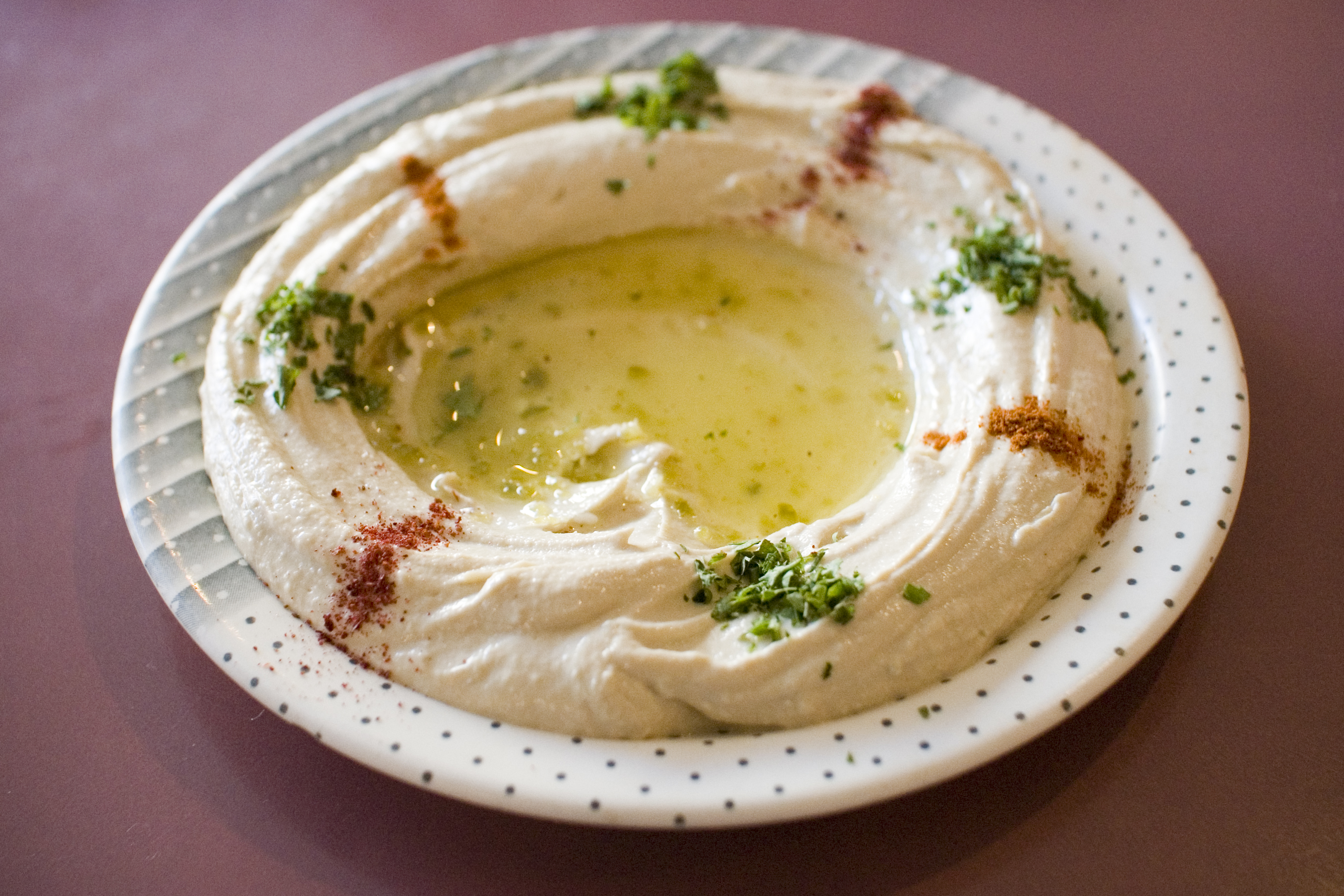
Taste & See: The other day some classmates were admiring my lunch: a toasted pita with hummus, melted gouda cheese and prosciutto on top. "Where'd you get that?" they demanded, hoping the restaurant was in vicinity. Actually, I've been spending extraordinary amounts of time at school recently, so last week I brought in some supplies from Trader Joe and now I just head on up to my office kitchenette every day for a quick bite. There is a microwave, toaster, and a small communal fridge, all I need, with the right materials, to make a faux gourmet lunch.
The point of this story is not the deliciousness of smearing a toasted piece of pita bread with hummus, piling on chunks of gouda and strips of prosciutto and microwaving for 20 seconds. It is delicious, yes, but the point is rather the ease with which such deliciousness is obtained. It required a wee bit of thinking ahead, true: when I went to Trader Joes I had to stand in the deli section and reach for the four components of my meal, a task I could do without even moving my feet. Beyond that, the only difference between my yummy lunch and your almost-turkey sliced cold cut/American cheese sandwich (which might still be tasty, if you like fake-turkey) is good ingredients.
Lest you protest my bougie sandwich fixins' are out of your price range, let me remind you how much a slice of greasy pizza costs, and that you'd gladly pay for it because your freezer is out of burritos and you're too lazy to de-thaw a chicken breast and frozen stir-fry veggie mix. I promise you, my pita lunch costs less. [The prices are from Albertsons online]:
Hummus: $2.50, 8 oz, lasts for about 6 sandwiches
Gouda: $4.99, 7 oz, lasts for about 6 sandwiches

Prosciutto: $10.99/lb; use about 1.5 oz ounces prusciutto per sandwich
 Pita bread: $2.19 for 6 pieces.

Total cost per sandwich: $2.64. Beat that.
(Not to mention superior taste & healthiness . . . )
Buying some nice grocery staples does cost a bit up front, but it enables you to make quick and easy food in lieu of ordering take-out or buying yet another slice of pizza when you're tired and don't feel like 'cooking,' and it definitely costs less in the long run. In short, it is the primary secret of being a faux gourmet.
If we're going to put our cards on the table, I will gladly admit my astounding culinary creations from my nearly-bare fridge are only possible because of the investment I'd already made in spices, sauces, and a few dried-good staples purchased in one fell swoop at the outset, now in my pantry just waiting for inspiration to strike:

So, what's a faux gourmet in the making to buy? Well, it depends on what you like, obviously, and the kinds of food you cook most often. I like to make various Asian foods, sometimes obviously Thai or Korean, sometimes a mix of my own using ingredients common to more than one cuisine.

The four ingredients above, lime juice, rice wine vinegar, red pepper flakes, and fish sauce (along with sugar) provide the basic four flavors (salty, sweet, sour, spicy) perfectly balanced in every Thai dish. From this starting point, it's a small jump to a cupboard capable of whipping up quick Asian-inspired dishes in a flash.

For example , sweet soy sauce, shrimp paste, garlic and *palm sugar combine to form an incredibly rich addition to curries. In the interest of helping you along your journey to being a faux gourmet chef of the highest order, I proudl present my "Top 30" list of non-perishables to stock up on for Asian food, along with a few produce items I regularly replace. *I don't include palm sugar on this list because you can easily use brown sugar as a substitute. [Prices, when listed, are from a random grocery store in Chinatown]:
Sauces
1. Soy sauce, 20 oz ($2.95)
2. Oyster sauce (can get vegetarian version), 20 oz ($1.95)
3. Soy paste , 20 oz ($2.05)
4. Fish sauce, 25 oz ($1.45)
5. Rice vinegar, 12 oz ($2.00)
6. Sriracha sauce, 28 oz ($2.95)
7. Sweet (thick, Indonesian style) soy sauce, 21 oz ($2.00)

8. Straw Mushrooms ($1.35)
9. Baby Corn ($0.05)
10. Bamboo Slices ($1.25)
11. Pineapple ($1.65)
12. Coconut Milk ($1.15)
13. Sesame Seeds ($0.95)
14. Dried Crushed Chili ($1.25)
15. Jasmine Rice
16. Rice Noodles
17. Egg Noodles
The vegetables make a great substitute for real produce when you just can't be bothered to make a trip outside. I frequently make a basic curry paste and just toss in two or three cans of whatever I have on hand. Having lots of coconut milk is crucial!
In the Fridge
18. Onions
19. Ginger
20. Garlic
21. Curry Paste (pre-made, in flavors like Panang, Green, Red, Massuman) ($1.75)
 [Curry paste packs an unreal amount of flavor in that $1.75; the lazy cook's BFF.]
22. Limes (or the juice-in-a-bottle as shown above, about $1.50 at Trader Joes's)
23. Concentrated Tamarind Paste ($1.75)
24. Bird's Eye Chilies

While these items should be refrigerated, they last a long time and don't need to be replenished too often.
Spices
25. Dried galangal powder ($1.00)
26. Dried lemongrass powder ($1.00)
27. Dried ginger powder

[Common to several southeast Asian cuisines, I've found the above in Vietnamese and Thai grocery stores.]
The cheater's version of the real thing, the three spices above are really optional, but you'll find them very handy in lieu of (often unavailable at my neighborhood supermarket) fresh lemongrass, and the distinct flavors really go a long way.
In the Freezer
28. Shrimp Paste ($3.95)
29. Dumplings
30. Whatever meat you like. You can generally make a dish with or without it, adding whatever meat (or potatoes, or tofu) you like or have on hand.
Shrimp paste: good as a subtle flavor in food, bad stinking up the kitchen. Keep in the freezer to avoid. In addition to being a handy late night snack, dumplings are a great addition to noodle dishes.
In the Fridge
Green Onions
Bell Peppers
Broccoli
Tomatoes
Dark, leafy green (kale, bok choy, etc)
Tofu, medium
Kim Chi, 32 oz ($4.75)
Fresh lemongrass
Potatoes
Tomatoes
Eggs
These foods are useful in a wide range of dishes, and obviously not just Asian ones, but of course you may adjust for whatever suits your fancy.

Sound doable? Don't be overwhelmed, with the exception of the produce, everything on this list can be purchased once and used for quite some time before you must brave the grocery store again. Unless, of course, you find cooking with these materials so fun you have a big dinner party & blow your supply in one merry evening. I'm not responsible for that . . . though I'm happy to provide some recipes!
The point of this story is not the deliciousness of smearing a toasted piece of pita bread with hummus, piling on chunks of gouda and strips of prosciutto and microwaving for 20 seconds. It is delicious, yes, but the point is rather the ease with which such deliciousness is obtained. It required a wee bit of thinking ahead, true: when I went to Trader Joes I had to stand in the deli section and reach for the four components of my meal, a task I could do without even moving my feet. Beyond that, the only difference between my yummy lunch and your almost-turkey sliced cold cut/American cheese sandwich (which might still be tasty, if you like fake-turkey) is good ingredients.
Lest you protest my bougie sandwich fixins' are out of your price range, let me remind you how much a slice of greasy pizza costs, and that you'd gladly pay for it because your freezer is out of burritos and you're too lazy to de-thaw a chicken breast and frozen stir-fry veggie mix. I promise you, my pita lunch costs less. [The prices are from Albertsons online]:
Hummus: $2.50, 8 oz, lasts for about 6 sandwiches
Gouda: $4.99, 7 oz, lasts for about 6 sandwiches
Prosciutto: $10.99/lb; use about 1.5 oz ounces prusciutto per sandwich
Pita bread: $2.19 for 6 pieces.Total cost per sandwich: $2.64. Beat that.
(Not to mention superior taste & healthiness . . . )
Buying some nice grocery staples does cost a bit up front, but it enables you to make quick and easy food in lieu of ordering take-out or buying yet another slice of pizza when you're tired and don't feel like 'cooking,' and it definitely costs less in the long run. In short, it is the primary secret of being a faux gourmet.
If we're going to put our cards on the table, I will gladly admit my astounding culinary creations from my nearly-bare fridge are only possible because of the investment I'd already made in spices, sauces, and a few dried-good staples purchased in one fell swoop at the outset, now in my pantry just waiting for inspiration to strike:

So, what's a faux gourmet in the making to buy? Well, it depends on what you like, obviously, and the kinds of food you cook most often. I like to make various Asian foods, sometimes obviously Thai or Korean, sometimes a mix of my own using ingredients common to more than one cuisine.

The four ingredients above, lime juice, rice wine vinegar, red pepper flakes, and fish sauce (along with sugar) provide the basic four flavors (salty, sweet, sour, spicy) perfectly balanced in every Thai dish. From this starting point, it's a small jump to a cupboard capable of whipping up quick Asian-inspired dishes in a flash.

For example , sweet soy sauce, shrimp paste, garlic and *palm sugar combine to form an incredibly rich addition to curries. In the interest of helping you along your journey to being a faux gourmet chef of the highest order, I proudl present my "Top 30" list of non-perishables to stock up on for Asian food, along with a few produce items I regularly replace. *I don't include palm sugar on this list because you can easily use brown sugar as a substitute. [Prices, when listed, are from a random grocery store in Chinatown]:
Sauces
1. Soy sauce, 20 oz ($2.95)
2. Oyster sauce (can get vegetarian version), 20 oz ($1.95)
3. Soy paste , 20 oz ($2.05)
4. Fish sauce, 25 oz ($1.45)
5. Rice vinegar, 12 oz ($2.00)
6. Sriracha sauce, 28 oz ($2.95)
7. Sweet (thick, Indonesian style) soy sauce, 21 oz ($2.00)

[(Fake) oyster sauce, sweet soy sauce & regular soy sauce make a great stir-fry base.]
Canned & Dried Goods etc.Sauces are a small investment that goes a long way, because a few dashes of many combinations of the above turns leftover broccoli into a dish worth writing home about (see entry to come).
8. Straw Mushrooms ($1.35)
9. Baby Corn ($0.05)
10. Bamboo Slices ($1.25)
11. Pineapple ($1.65)
12. Coconut Milk ($1.15)
13. Sesame Seeds ($0.95)
14. Dried Crushed Chili ($1.25)
15. Jasmine Rice
16. Rice Noodles
17. Egg Noodles
The vegetables make a great substitute for real produce when you just can't be bothered to make a trip outside. I frequently make a basic curry paste and just toss in two or three cans of whatever I have on hand. Having lots of coconut milk is crucial!
In the Fridge
18. Onions
19. Ginger
20. Garlic
21. Curry Paste (pre-made, in flavors like Panang, Green, Red, Massuman) ($1.75)
 [Curry paste packs an unreal amount of flavor in that $1.75; the lazy cook's BFF.]
22. Limes (or the juice-in-a-bottle as shown above, about $1.50 at Trader Joes's)
23. Concentrated Tamarind Paste ($1.75)
24. Bird's Eye Chilies

[Trust me when I say this little bag of chilies goes a long, long way.]
While these items should be refrigerated, they last a long time and don't need to be replenished too often.
Spices
25. Dried galangal powder ($1.00)
26. Dried lemongrass powder ($1.00)
27. Dried ginger powder

[Common to several southeast Asian cuisines, I've found the above in Vietnamese and Thai grocery stores.]
The cheater's version of the real thing, the three spices above are really optional, but you'll find them very handy in lieu of (often unavailable at my neighborhood supermarket) fresh lemongrass, and the distinct flavors really go a long way.
In the Freezer
28. Shrimp Paste ($3.95)
29. Dumplings
30. Whatever meat you like. You can generally make a dish with or without it, adding whatever meat (or potatoes, or tofu) you like or have on hand.
Shrimp paste: good as a subtle flavor in food, bad stinking up the kitchen. Keep in the freezer to avoid. In addition to being a handy late night snack, dumplings are a great addition to noodle dishes.
In the Fridge
Green Onions
Bell Peppers
Broccoli
Tomatoes
Dark, leafy green (kale, bok choy, etc)
Tofu, medium
Kim Chi, 32 oz ($4.75)
Fresh lemongrass
Potatoes
Tomatoes
Eggs
These foods are useful in a wide range of dishes, and obviously not just Asian ones, but of course you may adjust for whatever suits your fancy.

[Fresh lemongrass, ginger & galangal, with their powder-counterparts in the back, form the base of Gaeng Hang Lay curry paste.]
Sound doable? Don't be overwhelmed, with the exception of the produce, everything on this list can be purchased once and used for quite some time before you must brave the grocery store again. Unless, of course, you find cooking with these materials so fun you have a big dinner party & blow your supply in one merry evening. I'm not responsible for that . . . though I'm happy to provide some recipes!
Subscribe to:
Posts (Atom)


